Summary
Understanding how memory care helps sundowning can bring reassurance to families watching a loved one experience late-day confusion. Specialized memory care communities use evidence-based strategies to reduce the frequency and intensity of sundowning behaviors.
- Sundowning stems from multiple triggers including disrupted circadian rhythms, accumulated fatigue, reduced lighting, and unmet physical needs—trained associates identify each person's specific patterns
- Specialized design features like consistent lighting, color-coded hallways, and secure outdoor spaces create environments that minimize confusion and support orientation
- Predictable daily routines with calmer afternoon activities and light evening tasks help residents anticipate what comes next and redirect restless energy
- Associates receive specialized training in validation-based responses, redirection techniques, and recognizing early signs of agitation before behaviors intensify
- Family partnership and regular communication about behavioral patterns ensure care strategies are personalized and reinforced during visits, building trust across the care team
Sundowning, medically known as late-day confusion, affects many people living with dementia. It typically shows up in the late afternoon and evening, when confusion, agitation, and restlessness tend to intensify. Learning how memory care helps sundowning can bring real reassurance to families in Pittsburgh who are watching a parent go through this. At Overlook Green, specialized dementia care approaches combine structured routines, thoughtful design, and trained associates who understand what residents experiencing sundown syndrome actually need.
Learning about dementia sundown syndrome support can help families feel more confident about care decisions. The right environment, paired with the right guidance, can meaningfully reduce how often and how intensely sundowning shows up.
Understanding the Root Causes of Sundowning
Memory care teams recognize that sundowning stems from several overlapping factors. Common triggers include:
- Disruptions to the body's internal clock
- Fatigue built up over the course of the day
- Reduced lighting and longer shadows in the evening
- Unmet needs such as hunger, thirst, or discomfort
Associates at SHINE® Memory Care are trained to recognize each resident's specific triggers. Once the team understands what causes sundowning for a particular person, they can build targeted strategies around it. Documenting patterns and adjusting care plans over time creates a support system that evolves as each resident's needs change.
Environmental Design That Reduces Confusion
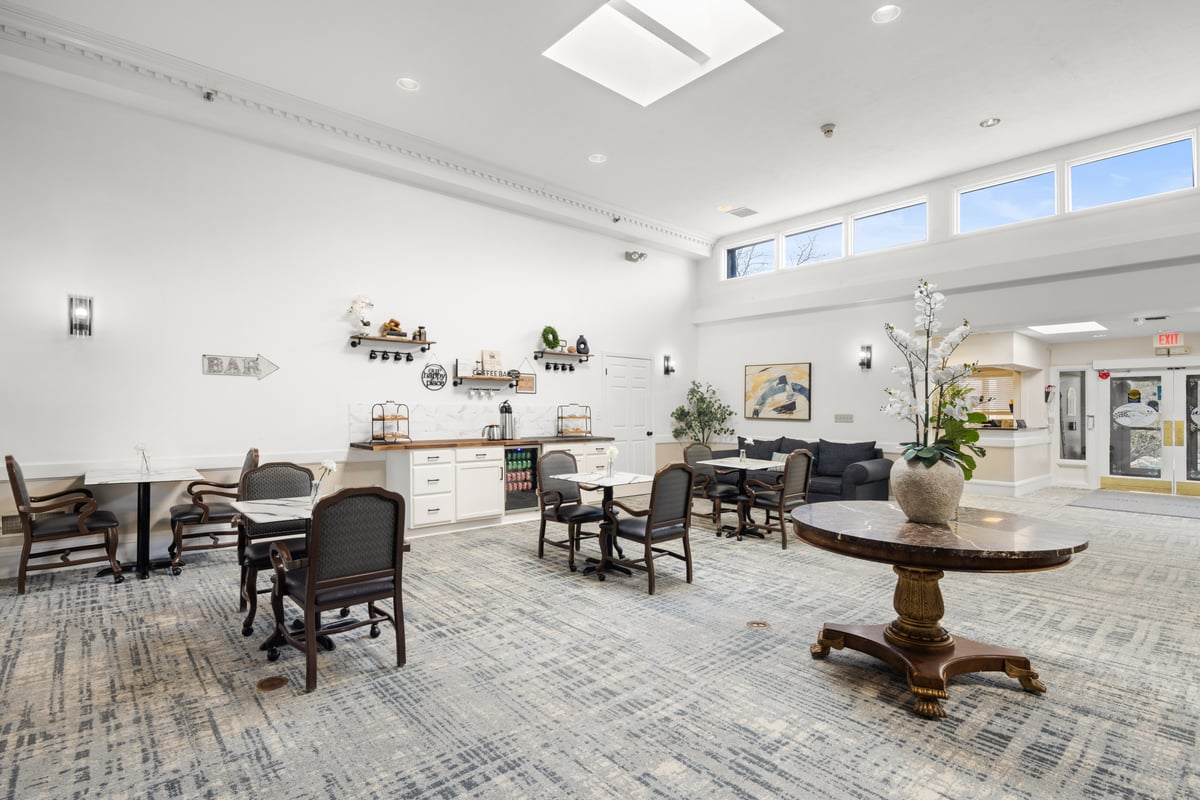
Specialized memory care neighborhoods use design choices chosen specifically to minimize sundowning triggers. A well-planned environment helps residents feel secure and oriented:
- Consistent lighting throughout the day to support circadian rhythms
- Window treatments that reduce harsh shadows and visual confusion
- Color-coded hallways and clear signage for confident navigation
- Secure outdoor spaces for safe exposure to natural sunlight
Research suggests natural sunlight can help regulate sleep-wake cycles, and these elements work together to support a resident's sense of safety throughout the day.
Memory Care Sundowning Strategies Built Around Routine
Predictable schedules are at the center of effective memory care sundowning strategies. Consistent wake times, mealtimes, and program periods help residents anticipate what comes next, which reduces anxiety and builds a sense of control.
Mornings tend to focus on more demanding tasks, since residents typically experience greater clarity earlier in the day. Afternoons shift toward calmer, familiar routines, and late-day schedules specifically target reducing sundowning behaviors, often through a light snack, a quiet task like folding laundry, or gentle movement. These choices help redirect restless energy before agitation builds.
Specialized Training for Associates
Associates supporting SHINE® Memory Care receive extensive training in dementia care, including specific techniques for managing sundowning in memory care settings. They learn to recognize early signs such as pacing, repeated questions, or withdrawal, so they can step in before behaviors intensify.
Training emphasizes validation rather than confrontation, helping associates respond to the emotions underneath the behavior. Skills include:
- Redirection and reassurance that respects each resident's dignity
- Simpler language and calmer tones
- Physical comfort when it's welcome
The goal isn't to eliminate every behavior, but to offer comfort and steadiness during hard moments.
Family Collaboration and Communication
Successful sundowning management depends on partnership between the care team and families. Overlook Green maintains regular communication about behavioral patterns, sharing what seems to trigger or calm specific moments.
Families bring valuable context, from a parent's history and preferences to strategies that have worked before. Many families take part in care planning conversations to discuss sundowning patterns and adjust the approach together. That transparency builds trust and keeps everyone working toward the same goal, and when families understand the strategies being used, they can reinforce them during visits.
Creating Meaningful Connections Despite Challenges
Beyond managing behaviors, SHINE® Memory Care focuses on quality of life for residents experiencing sundowning. Music, reminiscence programs, and sensory engagement offer ways to connect that go beyond cognitive challenges, and the senior living programs at Overlook Green are shaped around each resident's background and interests. These positive moments throughout the day can help ease evening agitation.
Frequently Asked Questions
Is sundowning the same for every resident? No. Triggers and timing vary from person to person, which is why associates track patterns individually.
Can families visit during the evening hours? Yes, though many families find that visiting earlier in the day, when residents tend to feel calmer, works well too.
What if sundowning behaviors get worse over time? The care team adjusts strategies as needs change, and families are kept informed of any updates to the approach.
Individuals living with dementia deserve dignity, purpose, and connection, regardless of the challenges sundowning brings. By combining thoughtful design, specialized training, and steady communication with families, SHINE® Memory Care at Overlook Green supports both the practical and emotional sides of late-day confusion. Learn more about our dementia and memory care resources, and when you're ready, schedule a tour to see the community for yourself.